

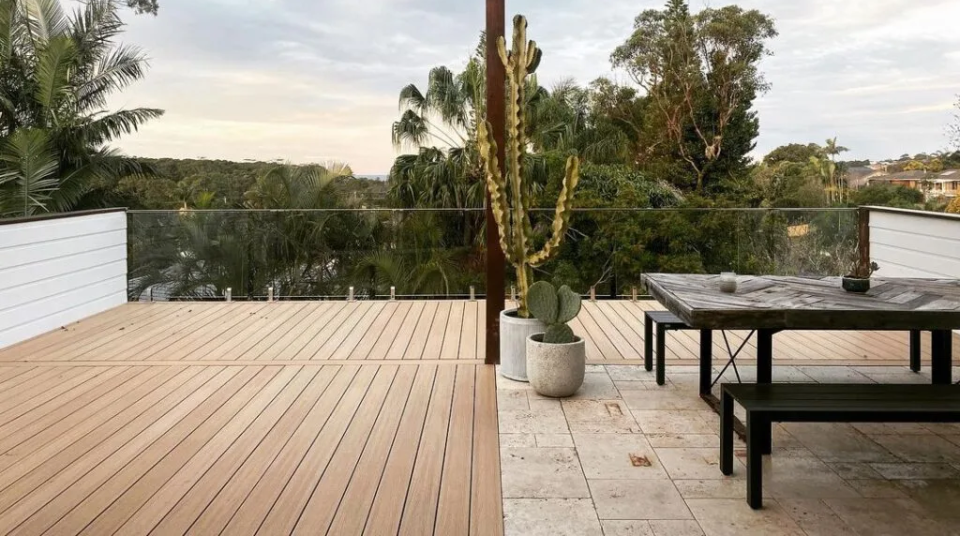
Composite decking has become a popular solution for builders and homeowners looking for a durable, low-maintenance alternative to traditional timber decking.
Modern composite boards are designed to withstand Australia’s harsh conditions while maintaining their appearance over time. Many products combine recycled timber fibres and plastics (wood-plastic composite), while others use PVC-based materials for enhanced moisture resistance.
Builders can source a wide range of composite decking solutions through Dahlsens, including:
- Everdeck
- Millboard
- ModWood
- NewTechWood
- TimberTech
- Trex
The success of any composite deck can come down to installation. Here are practical tips to help achieve the best results. As always, read the manufacturer’s installation guide before getting started.
1. Choose the right composite decking for your application

Before selecting a product, consider how and where the deck will be used.
Factors such as ground clearance, exposure to moisture, ventilation and framing type will influence the most suitable system. Understanding the application first helps narrow down the right product.
Michael Ranieri, decking specialist and owner of MVR Decking, says the choice of board material can also affect long-term performance depending on the environment.
“PVC boards are 100 per cent synthetic, while WPC boards are wood-plastic composites,” Michael explains.
“PVC tends to offer better moisture resistance and longevity, and I’ve found they also stay cooler underfoot compared to WPC boards, which absorb heat more quickly.”
2. How to manage composite decking expansion and contraction
Composite decking boards expand and contract with temperature changes.
For best results:
- Cut all boards at the same time during the cooler part of the day
- Allow the correct expansion gaps
- Follow the manufacturer’s spacing guidelines
Michael says installers should always be mindful of board temperature when cutting.
“Always cut the boards when they’re at their coolest temperature,” he says.
“If you cut them while they’re hot and they shrink back as they cool down, the gaps will end up bigger than you expected.”
He also notes that expansion rates vary between products.
“In my experience, WPC boards expand more in the heat than PVC boards, so it’s important to factor that in when planning your spacing.”
3. Composite decking subframes and substructure systems
The most common cause of deck failure isn’t the decking boards – it’s the framing underneath.
If the framing deteriorates or is installed incorrectly, the entire deck can fail. Choosing the right structural system and installing it correctly is critical for long-term performance.
The best framing solution depends largely on clearance and exposure.
Low-clearance decks
- ClickDeck aluminium subframe systems can go as low as 2mm clearance
- H4 treated timber can be installed over a concrete slab
Standard clearance decks
- H3 treated timber framing
- ClickDeck aluminium subframe systems
- Spantec steel subfloor systems
High decks
- Spantec steel subfloor systems are often more suitable
Commercial decks
- Steel framing systems such as Spantec subfloors are commonly used
Matching the framing system to the environment helps ensure long-term durability.

4. Joist spacing requirements for composite decking
Composite boards require more consistent support than many traditional timber decking boards.
Always follow the manufacturer’s recommended maximum joist spacing, which may vary depending on:
- The decking product
- The installation pattern (straight or diagonal)
- Expected loads
Incorrect spacing can lead to excessive flexing or board movement over time.
5. Ventilation and drainage: meeting Australian Standards for composite decking
Good airflow and drainage are essential for composite decking systems.
Follow Australian Standards and manufacturer guidelines for:
- Minimum ground clearance
- Ventilation requirements
- Board spacing
- Drainage management
Poor ventilation can lead to moisture build-up and structural issues over time.

6. How to protect composite decking joists from moisture
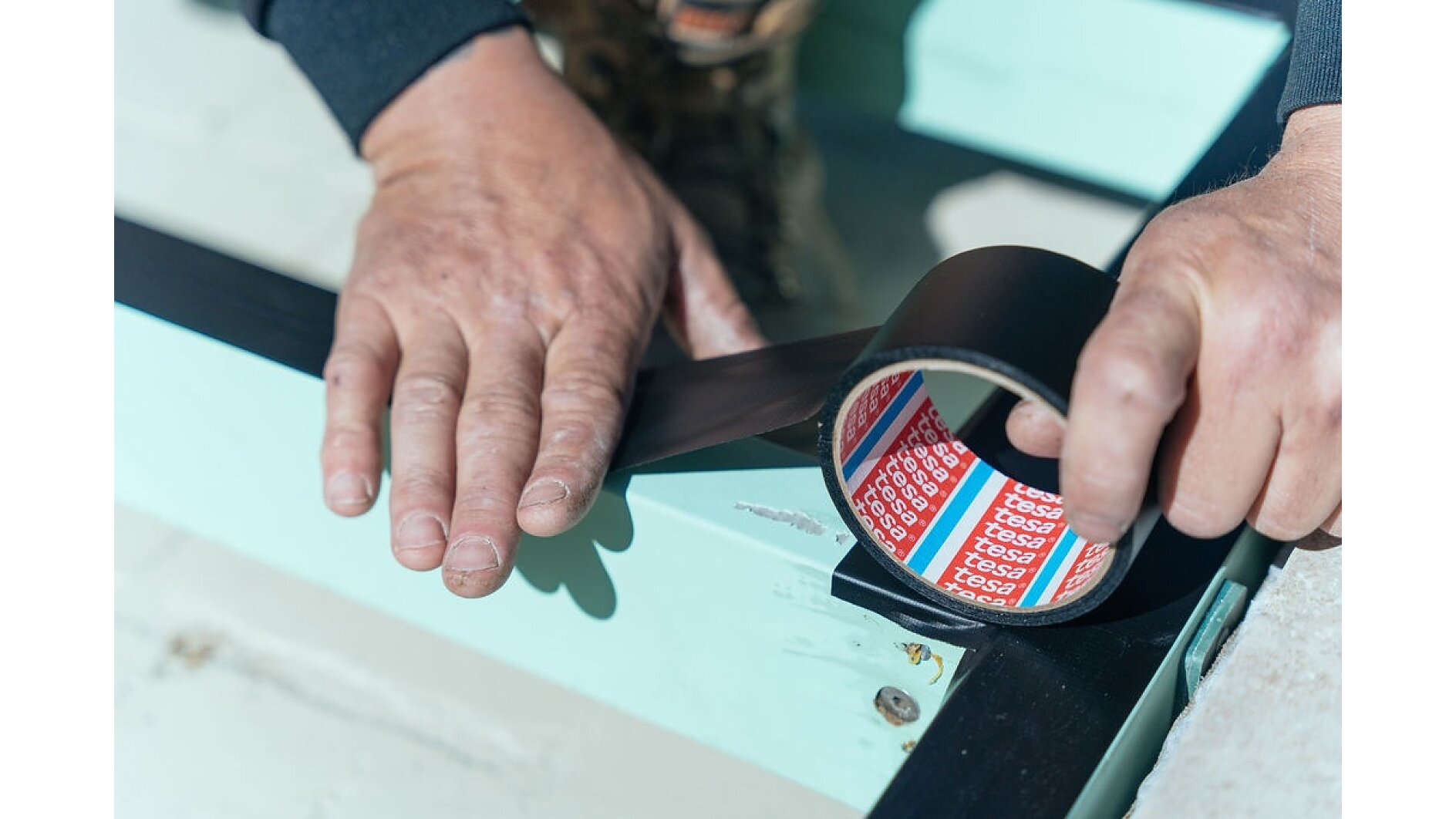
Adding joist protection tape on top of the framing isn’t mandatory, but it can significantly extend the life of the structure.
Products such as Tesa JoistSeal protection and flashing tape, available in 50mm and 100mm widths (20m rolls), create a protective barrier between decking boards and the framing.
Benefits include:
- Reducing moisture exposure
- Protecting screw penetrations
- Helping prevent premature rot or corrosion
- Extending the life of the substructure
This is particularly useful with composite decking, where boards can trap moisture against the joists.
7. Composite decking fixings and concealed fastener systems
Composite decking systems often require specific fasteners or concealed fixing systems.
Using the correct fixings helps ensure:
- Proper board spacing
- Reduced board movement
- A cleaner finished appearance
- Warranty compliance
Always follow the manufacturer’s recommendations.
8. Corrosion-resistant hardware for composite decking in coastal and pool environments
Not all fixings are suitable for outdoor environments.
Deck builders should ensure they use galvanised or stainless steel fixings designed for exterior use. In coastal environments or around pools, corrosion resistance becomes even more important due to constant exposure to moisture, salt and pool chemicals.
Michael Ranieri, decking specialist and owner of MVR Decking, says using corrosion-resistant fixings is critical for long-term durability around pool areas.

Using the right hardware not only improves durability but also helps protect the integrity of the decking system over time.
9. Composite decking design techniques: heat folding, board bending and pattern laying
Builders are getting increasingly creative with composite decking, using clever techniques to elevate design and deliver a more refined finish for clients.
Michael says heat-folding has become a popular technique for achieving seamless edges.
“The key is to take your time and not hold the heat gun too close,” he explains.
“If you rush it or apply too much heat, you can burn or split the board.”
He also notes that the technique varies depending on the board type.
“With PVC boards you can heat the face of the board, but with WPC boards it’s better to heat from the back.”

Other popular design approaches include:
- Board bending using heat to achieve curved designs
- Finishing exposed butt joins with a filleted piece of composite decking matched to the surrounding grain
- Direction changes, such as herringbone patterns, to add visual interest
Michael also recommends colour-matching exposed board ends with an exterior paint for a cleaner finish.
“If you’ve got a breaker board or picture frame board and you can see the cut edge through the gaps, it looks much neater when that edge is colour-matched to the decking,” he says.
“Otherwise you’re looking at a dark grey composite core, which can stand out.”

10. Composite decking maintenance: what to tell your clients
Composite decking is low maintenance — not maintenance-free.
To keep decks looking their best, encourage clients to:
- Clean regularly with soapy water and a soft brush
- Rinse with a hose
- Use board-specific cleaners for heavier stains
With proper installation and basic care, composite decking can deliver long-lasting performance.
Composite decking supplies and expert advice at Dahlsens
With a wide range of composite decking solutions available, selecting the right system often comes down to the specific application, site conditions and builder preference.
You’ll already be familiar with many of these considerations, but aligning product choice with environment and installation approach can make a significant difference to long-term performance.
If you’re unsure, the Dahlsens team can help you select the right composite decking system for your next project and provide practical guidance to support a quality result.
And as always, refer to the manufacturer’s installation guide for product-specific requirements to ensure correct installation and maintain warranty coverage.
Thanks to Michael from MVR Decking for sharing your expert tips.